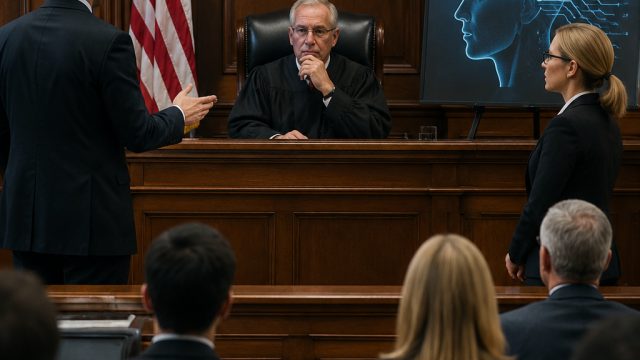
In a significant development in the realm of artificial intelligence regulation, a federal court in Washington, D.C., is set to hear a pivotal case challenging the authority of the U.S. Department of Commerce regarding the export of AI technologies. This case, initiated by Legion LegalTech against the United States and key government bodies, aims to address crucial questions about how AI services are treated under current export control laws.
Understanding the Case Against AI Export Controls
The case revolves around the directive that prompted AI companies like Anthropic to limit access to their models, specifically Fable 5 and Mythos 5, for users outside the United States. Legion LegalTech argues that restricting access to these hosted AI services does not equate to exporting controlled technology as defined by existing laws. This legal challenge is significant for several reasons:
- Clarification of Export Definitions: The core argument is that users interacting with AI models via hosted services do not receive the underlying technical components such as code or data. Instead, they provide prompts and receive generated text, complicating the traditional understanding of what constitutes an export.
- Impact on AI Accessibility: If the court sides with Legion LegalTech, it could pave the way for broader access to advanced AI technologies for international users, potentially fueling global innovation.
- Regulatory Precedents: The outcome of this case may set important precedents for how future AI technologies are regulated, especially in terms of international collaboration and trade.
The Role of Commerce in AI Regulation
The U.S. Department of Commerce has asserted its authority to regulate AI technologies under export control laws, citing national security concerns and the need to prevent potential misuse of advanced technologies. However, critics argue that this regulatory approach could hinder innovation and international cooperation in the rapidly evolving AI landscape.
As AI becomes increasingly integral to various sectors, from healthcare to finance, the implications of export controls will affect not only businesses but also researchers and consumers worldwide. The case outcomes could redefine how AI companies operate and engage with global markets.
Key Considerations in the Ongoing Court Proceedings
Legal experts and industry insiders are closely monitoring the proceedings for several critical reasons:
- Legal Definitions: The court must clarify what constitutes an export in the context of AI services. This will influence how companies develop and deploy their technologies.
- Balancing Innovation with Security: The ruling could dictate how the U.S. balances national security with the need to remain competitive in AI innovation.
- International Business Relationships: Companies may face new challenges or opportunities depending on the court's interpretation of export regulations.
Broader Implications for the AI Industry
As this case unfolds, its implications extend beyond the immediate legal framework. The outcome could reshape the landscape of AI development, particularly in terms of:
- Investment in AI Technologies: Companies may reassess their investment strategies based on the potential for increased accessibility or regulatory hurdles.
- International Collaborations: A favorable ruling for Legion LegalTech could encourage more partnerships between U.S. firms and international entities, fostering a more collaborative global AI ecosystem.
- Future Regulations: The case may inspire further discussions and potential reforms in how AI technologies are regulated moving forward.
Conclusion
The ongoing court case concerning AI export controls marks a pivotal moment for the industry, raising essential questions about accessibility, innovation, and regulatory authority. As the court deliberates on these complex issues, stakeholders across the AI sector are urged to stay informed and prepare for possible shifts in the regulatory landscape. Understanding this case is crucial for anyone involved in tech, as its outcomes could shape the future of AI not only in the U.S. but around the world.